Friday, October 16, 2020

Streets 2 - Value


Photo of a street, caption "2"
< Back  |  Forward >

So, the street in front of my house is a part of a system of streets—a natural human system, a delivery system for the natural values provided by human community.

Every system has observable qualities. If one is curious about a system, I think it’s useful to observe and catalogue that system’s qualities.

So I think I’ll do that.

____

Remember, this system in which I take part is natural. If you trace it back far enough, it’s established on natural resources and values that nobody bought, nobody sold, nobody made. Wide river or vast reservoir or shoreline, rich topsoil, natural minerals, teeming forest, you name it. And so a natural system of humans sprang up, which believed it would need a human where my house is, and I became that human. I give my house value and meaning, and also my street. And I give my neighbor’s house value and meaning, and they similarly enrich mine. There is a community, and I share in it. And that community has a collective will, and I share in that, too.

This value the streets provide: it’s shared.

Shared.

Your street is there now. Maybe you can look up from your screen and see it, maybe not, but it’s there, ready to offer its gifts of transportation and interconnectivity from your house to the very borders of your country, and beyond.

Do this: close your eyes and picture your street.

Now: picture the potential for transportation it provides. What does that potential look like? I mean the physical thing. Does it have physical form? Is the form you chose a metaphor?

If you’ve seen the potential for transportation that all the interconnected streets provide, let me know. I never have.

My street, too, is a delivery mechanism for the value a community provides. It does this so effortlessly that, in the manner of water to fish, or sky to birds, it’s practically undetectable for me and all those who receive it. Until I started writing this, I rarely thought about my street. You could almost say I didn’t see it. I have never seen the potential for transportation it provides.

This shared value the streets provide: it’s invisible.

Invisible.

It’s the context from which everything else springs. Any trip I take, no matter how far I go, begins with my street, and only continues as it does because of the existence of other streets. If the streets weren’t there, I’d be far less likely to get there, or to even know they exist. I may go to many different places, but to a very real extent what places I go, and how I get to those places, is determined by the placement of streets. So this is another way that streets resemble the whole of a natural human system, which provides all the context for all my potential action. Almost every possibility available to me, no matter how smart I am, no matter how innovative, no matter how successful, none of it would be possible if there weren’t a community to share in it. I may know more than anyone else, but who taught me?  I may provide many jobs, but who provided the labor to fill those jobs? My innovations may provide incredible value, but who is there to appreciate it, and remunerate me for my contributions? No matter how skillful, or intelligent, or hard-working, or diligent, or innovative I am, this value we all share is why I’m able to apply those skills to anything more than my own cabin alone in a wilderness.

This shared, invisible value the streets provide: it’s foundational.

Foundational.

And: imagine my neighbors weren’t there. Imagine mine was the only occupied house on the block. My residence on an otherwise deserted street would start to seem like a bizarre curiosity, or at least the emptiness of all the other houses would seem to me an ominous sign.

It would be difficult for me to sell such a house—far more difficult than it would be for me to sell the exact same house in a fully occupied neighborhood.

This leads me to an odd conclusion: my neighbors lend more value and meaning to my house than I do, even though they don’t live in it. And even as we lend our street meaning, all the other people in the city lend more meaning to us and our street than we lend to them, even though none of them live on our street. And this favorable unbalance exists in the relationship between each of those other people and their own streets, and all the other streets—including mine—that are not theirs. And, in fact, the more I’m able to grow from this foundational soil of shared value, the more I owe to it. The more success I’m able to create for myself, I’m able to create only because this foundation exists, which generates more potential and opportunity for an individual than that individual would ever be able to generate for themselves. The more people, the more opportunity, potential, resource. A city of a million can do more than a city of a hundred. Isn’t that odd? The more there are to share, the more the system generates to be shared.

This shared, invisible, foundational value I derive from my street—it’s generative.

Generative.

There is no procedure set for this value, this meaning. There’s no account into which this value and meaning will be deposited, no wait time for the receipt.

It’s just there, automatically.

We can’t not get this value. They can’t not give it. How could you live in a city and not live around its streets, or benefit from their existence?

And the people who live in the city don’t live there in order to give our street value. It’s not done through any intentional act on their part. As long as we live here instead of somewhere else, the streets will go on delivering us the value of living here. And if we go somewhere else, then the streets there will deliver similar value in the same way. We seem to have a shared life in some mysterious way, which finds its center-point simply by existing here, instead of there. The value and meaning we give to each other is connected in way that is inextricable.

This shared, invisible, foundational, generative value I derive from my street—it’s automatic and inextricable.

Automatic. Inextricable.

How interesting.

____

Remember, this natural system in which I take part is human. It involves humans. Humans have taken something that naturally occurs, and they built something around it. In so doing, they’ve taken what was natural and made it something else.

My street was built sometime in the 70s or the 80s. I know, because my house was built in 1990, and because I happened upon a map of my city drawn up from the late 60s and my street wasn’t on it, though some surrounding streets were.

It’s new, my street. When the construction crew showed up, they put a street where no street had previously been.

However, my city was founded around 1840 or so, long before construction crews knew how to pave for cars; long before cars, in fact. Many streets in my city—the very streets that lend my street more value than my street lends them back—have been there for quite a while, and were, at some point, modernized.

And: Streets need to change over time, to be improved. Sometimes a new street must appear to meet a new opportunity, or that opportunity will never be realized. Existing streets require maintenance or they lose value. And—since streets give a city value, and the city returns a small portion of that value to the streets, which makes the streets more valuable, which allows the city to receive more value—a city that chooses not to maintain and improve its streets makes a foolish choice, to slowly become less and less able to produce and deliver value in a changing world.

My city was wiser than that. My city maintained and improved its streets, and so became a modern city.

The shared, foundational, generative, automatic, inextricable value that comes to me from all my city’s streets, delivered all the way down to my street … it can be changed, enhanced. It’s configurable.

Configurable.

My city decided to modernize its streets—a reflection of their already-existing value, an investment in the continuance of that value. A belief that there would be, in the future, people to use those streets, to enjoy that value, and to naturally provide value through their presence.

And so, any number of people did the dance that people do, when they temporarily manifest the collective will of a group. Representatives chosen, decisions made. Then the city planner, then the foreman and workers, then the residents and shops.

And so there they are, older streets made modern, climbing up and down hills, winding around parks, tracing the courses set down by others, long before I was born. Taken together they connect a community; lend value to all the other streets just as the other streets lend value to them. They lend value to my street.

My street wouldn’t ever have been built, if the older streets, modernized and improved, hadn’t been there to suggest the possibility of my street.

The people who put those oldest streets there didn’t do it for me. Yet I am here.

There was no intentional act at the time to enrich me specifically. Yet I am enriched.

In some way, without intending to, I’ve inherited the value of those streets, laid down 150 years ago. And there’s literally nothing I can do to divest myself of that inheritance. It comes to me as naturally as the rain that falls on the roof—my roof. Is it my rain? I suppose you could look at it that way.

The shared, foundational, generative, automatic, inextricable, configured value of my street … it’s inherited.

Inherited.

The configurations made to this natural human system of streets affect me based on where I live, not on what I think the streets should do. They provide their value based on how those who configured them, acting as part of our shared will, decided they should affect the me they thought would live there, the me that I became. If the city decides that my street should receive only the best, I will receive only the best. And, if the city decides that my street is worthless and deserves nothing at all, I will receive nothing. How I personally feel or what I believe about these configurations to this natural human system doesn’t enter into it at all—my neighbors and I will all share in this configured inheritance in the same way we share in everything else in our natural human system, that is: foundationally, generatively, automatically, inextricably.

So this inheritance has nothing to do with intention. I receive it even if it accrued years, decades, centuries before I was born. Nor is the value I gather from that inheritance something I can separate from myself. I receive it so effortlessly, it would be possible for me to receive it without even being aware of it, as a tree received nutrients from its roots without a thought to fungi connecting it to its forest, the way its leaves receive rain without a thought to anything like a cloud.

To recap: My street is part of a natural human system in which I partake, established by a will in which I partake, to deliver value that is shared, invisible, foundational, generative, automatic, inextricable, configurable, and inherited, delivered to me not because of anything I did; delivered all because there was a need for a me, and I have become that me.

How interesting.

And I wonder: how have we configured our streets? How are we configuring them? How will we configure them in the future?

And I wonder: what else might I have inherited through this configuration?

What other good?

What other harm?

What I like about the street metaphor is, it's not a metaphor.

Black Lives Matter protest

A.R. Moxon is a writer. His novel The Revisionaries, is available now, with the paperback edition releasing December 1, 2020.

Back | Forward >

0. NEXT

PART I: HERE
1. STREET
2. VALUE
3. CONFIGURE
4. NEIGHBOR
5. INHERIT
6. ALIGN

PART II: NOW
7. CONVICT
8. CONFESS
9. REPENT
10. REPAIR


Streets 1 - Street

Photo of a street.
Back  |  Forward >
 

Here’s my situation: There’s a street in front of my house. Perhaps you can relate.

Let me describe this street. It’s rather hard, mostly smooth, mostly flat, made of some sort of composite material, beveled slightly downward at the edges to accommodate rain runoff, pocked here and there with lids covering access points to sewer and water infrastructure. We call these access points “manholes,” though I assume women will also fit down them.

The street is connected to the houses lining it by a series of umbilicals we homeowners call our “driveways.” This street is connected to some other streets, which connect to still other streets, which connect to other streets, some of which arrive at other locations within the city, others of which lead out of the city, to other cities. Maybe you have a similar setup.

It’s the street where I live. This makes it my street.

I drive on the other streets, too. They’re lined with houses. People live in those houses. I suppose the people in those houses think of the streets I drive as their street. Almost an unconscious thing.

I drive on their streets. I don’t ask first. They’re very cool about it. They never complain. And I pay their hospitality forward, too; other people drive down my street every day, and they don’t ask permission either, and I’m extremely cool about it, though my dogs are not cool about it.

They bark.

It's not very effective.

I use my street every day. It’s how I go places. If my street was gone, I’d miss it. I’d have to hunt for parking somewhere a block away, trudge out to my car whenever I wanted to use it.

If everyone else’s streets were gone, I’d miss them, too. Interestingly enough, if all the streets disappeared, I’d miss everybody else’s streets more than I'd miss my own. Moreover, if all of their streets were gone, it wouldn’t really matter if my street were still there. I’d have to walk everywhere, or get a vehicle that could handle cross-country driving, like an F-Series truck, maybe, or a brace of oxen.

The value of my street depends, intrinsically, on all of their streets. And the value of their streets depends, in part, on mine. And, it seems, the collective mass of streets provides me more value—much more, in fact—than my own specific street.

The value and benefit of our streets are entangled with each other, inextricably. You can’t take one away without diminishing the rest.

Each one by itself would be a bizarre curiosity. Together, they connect a community. Which leads me to a set of perhaps surprising conclusions: there is a community, that actually exists. And: I’m part of it.

None of this happened because any of us—me, my neighbors, you, your neighbors, and everyone in between—actively intended to do it. It even happens if we don’t like each other. It happens pretty much exactly the same way for me and my neighbors even if we disagree with each other on literally everything—if fact, what we believe or intend or think has literally no impact on the benefit we receive from our street, or any inconvenience we would receive if the street were demolished. All that really matters, from a practical purpose, is that we are where we are, at this point in time.

Everyone I know has a street, in some manner of speaking. 

I don’t know anybody who constructed their own street.

How interesting.

____

Question: Who put my street there, in front of my house?

Who put your street there, in front of your house?

Who put my street there?

Have you ever wondered?

____

Literally, I mean. Who did it? Who’s the one person who is responsible for my street?

It’s not a confusing question, but I don’t find the answer immediately obvious.

Do you know who put your street there?

I mean, I presume at some point there was a construction crew, a group of people who did the actual labor of clearing the ground and digging the trenches for water and gas and sewer and electrical hookups to the various plots, then tamping it smooth, and grading it, and then maybe laying down gravel, and then a layer of boroscite, and maybe then five layers of muscelinated grist of various elasticities and torsions, and then the final layer of toprock before planating the asphalt surface.

I would like to be clear: I don’t know how it’s done at all. I am utterly clueless. In fact, I just made up most of those words I used.

But … the road crew knew. After all, they did it. But I wonder: did any one of them know exactly every step of it? Is there any one person among them who could, all by themselves, build the street?

Maybe so.

After all, I assume they had a foreman of some kind, who had the plan for the street, and understood each piece of it, and directed the operation from start to finish. But could the foreman have operated each machine used in the construction? Did the foreman have the actual physical knowledge of each step and how to practically enact them? Put another way: if the foreman had been left alone, could the street have still been built, however slowly, and, if so, would it have been as skillfully done?

Even if the answer is ‘yes,’ can you say the foreman put the street there? Did the foreman decide on putting my street there instead of somewhere else?

What about the plan the foreman followed? Did the foreman make the plan? Probably not.

Probably there was some sort of city planner, a highly trained civic engineer, perhaps an architect, who understood the proper way to build the street, who drew up the plan, and the methods, specifications, regulations. Perhaps the same city planner was even the one who coordinated the efforts, who assigned the foreman and the road crew, who organized supplies.

But even in the unlikely scenario under which the city planner did every bit of this work, could it be said the city planner built the street?

First of all, could the city planner have done all the labor? Would the city planner have been in possession of all the same tactical practical physical knowledge as the foreman? Even if so, of course, you have all the industries that made the materials and tools and equipment that came in from elsewhere, which the crew used to build the street.

But even if you take away all that support … why did the city planner decide to put the street there?

I assume the city planner decided to do that because she was assigned to do it. And she was probably assigned to do it because there were going to be houses put there. So there was zoning and registration and parceling and all of the civic activity that’s necessary to have construction come out and build houses to which a street might be connected, to connect to other streets, without which the houses would have little value to the city.

I presume it’s because the city decided there needed to be a street there.

Wait.

The city decided? The city? Decided?

A city is a collection of buildings, isn’t it?

Who is “the city?”

Who put my street there?

____

I’m being coy, of course.

We know what is meant by ‘the city,’ when it comes to zoning decisions, and it isn’t a collection of buildings.

We know why the street is there.

My street is there because somebody decided to build houses there, and houses need streets.

Someone decided to build houses there because somebody decided they wanted a house there, either to live in, or to sell to someone to live in.

But they wouldn’t have wanted to do that, I presume, if there hadn’t already been streets and houses nearby—would they? I mean, conceivably, the construction crews that put the houses on my street could have put those same houses in the middle of one of my state’s many forests, but they didn’t.

Why?                                                                                  

I'm only speculating here, but perhaps it's because out in the middle of the woods, the houses would have had very little value. Likely nobody would have bought them. And no city would agree to build a street for them. They’d rot away, unlived in, unknown, a bizarre and eerie curiosity for a hiker to find, or a wolverine.

The city agreed to build a street for those houses because the city decided there would be value to adding to the city, in the form of more people. And people need houses. And houses, of course, need streets.

And so the street was decided upon.

But we know it wasn’t the city. It was the people in the city. They decided.

But we know it wasn’t all the people. It was the people appointed to the task of making those determinations. They decided. When we say the city decided, we actually mean them. Those people, in that moment … they were the city; a brief and targeted manifestation of our collective will.

Our? Of course. All of us. We decided on them to be “the city.” At least, those of us that participated in that decision making process did. 

Or those of us who were allowed to.

And then there were others of us, who perhaps were too busy or disinterested or disaffected or disenfranchised to participate directly, but who nevertheless hold a certain set of opinions about what is good and desirable, and that set of opinions lends itself to a general and shared knowledge set, which we might call "common knowledge" about what is good and desirable, which would inform our appointed decision-makers decisions in many ways, some of which they probably wouldn't even consciously think about. 

And then they decided. And, if they were good at being the city, they listened to what the "common knowledge" thought of that decision, and also remembered previous similar decisions, and tried to replicate what had worked for the most people from those previous decisions, and tried to avoid what hadn’t worked for most people from those same decisions.

And in that way, as best they could, they represented our collective will.

A collective will. And streets are a delivery mechanism—one of many—for that collective will. Streets are how the collective will delivers transportation to itself.

And then the city planner, drawing out the plans for the street, became a brief targeted manifestation of our collective will.

And then the foreman, and the workers.

And then, finally, me.

Because our collective will decided that a street should be there, for people to live in.

And they were right. There are people living in those houses. I’m one of them. We live in the houses, connected to the street, and we drive on the streets, and we give value to the city. We don’t live there in order to give the city value, but we give it value all the same. Nor can we not give the city this value, unless we choose to move away, and give some other city our value.

But of course, there was a time before any streets were built, when people decided to live here instead of there. It wasn’t a random decision. Some natural confluence occurred that people recognized as providing some sort of natural value. In my city’s case, as with so many cities, that confluence was something human beings naturally understood: water. Water sustains life. It allows agriculture. It allows easy transportation to other cities down-river, who made the decision to settle here instead of there for the exact same reason we did. For my city, as with so many cities, our first street was one we had no hand in building at all—a river.

Nobody did anything to get the river. The river was there, delivering its value, and so people came to it, and from that natural delivery system, we built more systems of our own to deliver value to those living there—things like barges, docks, locks, fish ladders. And houses.

And streets. In a very literal sense, my street can be seen as a branch off a river.

My street … at its very origins, it wasn’t something purchased or earned. It was a natural gift. It’s natural.

Natural.

But, if I and my neighbors weren’t there, the houses would have no value and meaning, nor the street—unless others came and lived there. If there were no people living in any of the houses, the city would have no value, no meaning. It would be a bizarre and eerie curiosity.

We need there to be a community. A community needs there to be us. And so it comes to be.

The street is there on my behalf, because it was decided somebody should be there on everybody’s behalf, and that somebody turned out to be me and my neighbors. If it hadn’t been us, it would have been somebody else, unless nobody else came, in which case the houses, unlived in, would eventually cease to exist, and so would the street.

We need there to be a community. A community needs there to be us. And so it comes to be. And so we come to be. Because we are humans.

Human.

A street is a part of a natural human system. And I am a human. Thus, I exist, in a very observable way, within a system. To perceive it I just have to walk out to my mailbox and look both ways.

How interesting.

Who put my street there?

I did.


Picture of a street.

A.R. Moxon is a writer. His novel The Revisionaries, is available now, with the paperback edition releasing December 1, 2020.

Back | Forward >

0. NEXT

PART I: HERE
1. STREET
2. VALUE
3. CONFIGURE
4. NEIGHBOR
5. INHERIT
6. ALIGN

PART II: NOW
7. CONVICT
8. CONFESS
9. REPENT
10. REPAIR


Streets: Part I - HERE


photo of a street with the caption "here"
< Back  |  Forward >

So: he’s a liar.

So: he’s a fascist.

So: he’s an authoritarian.

So, he’s using his office to enrich the businesses he still owns and from which he still profits.

So, he encourages and celebrates police violence, and advocates the use of military force against peaceful protest.

So, he’s using the exact language and phrases of white supremacy and neo-Nazis and fascism, pursuing their exact desired policies.

So: he’s deliberately demolishing all norms and standards of a functional democracy, in service of demolishing democracy, in service of himself.

So: he’s working to put himself entirely above the law, and, even more, positioning himself as the law, as someone whose authority must not be questioned, to whom loyalty is irreducible from patriotism, for whom criticism must be understood as not just criticism of the country but as an attack on it.

So, he used the power of his office transactionally, first to try to destabilize the coming elections, then to try to punish political enemies by imposing medical sanctions on his own citizens during a pandemic; premeditated manslaughter at best, genocide at worst.

And: His entire party has rallied around these efforts, in support of them, almost as if somebody doing what he is doing was the plan all along.

And: His followers, his true believers, millions and millions strong, all cheer for him, and the worse he gets, the more that he perfectly embodies all of the worst things any of us warned he might become, the more they seem to love him. They cheer and cheer and cheer, and they tell us to get over it, and they say “fuck your feelings,” and then they tell us they love the way he makes us weep, because they love to drink our tears. And they take to the streets and government buildings with guns to win back their never-lost right to honor murderous soldiers who fought to preserve chattel slavery, or to establish their right to spread a virus to the satisfaction of their own convenience. And they laugh and laugh and cheer and cheer and yet they never seem to get happy.

They cheer for a system that is optimized for the abuse of the marginalized by the powerful, not because they are powerful, but because seeing the abuse of the marginalized comforts them that they are not marginalized.

Picture of Donald Trump at a rally surrounded by cheering white people.

And: Comfortable masses, tens of million strong, seem not to worry about any of this, as long as it doesn’t touch them personally; seem willing to overlook any outrage to any other person, seem capable of finding any handy excuse in any given moment to separate themselves from the inconvenience of caring.

If you think all the quite obvious truths listed above seem hysterical, overwrought, scolding, divisive … then you speak the language of the comfortable masses, for whom the report of abuse is seen as the real abuse, who resent the screams of the victims far more than the screams of their attackers, because the screams of the victims seem to dare expect some sort of moral response, while the screams of the attacker ask only for complicit silence, which is the preferred posture.

They keep silent in a system that rewards comfortable enablement of abuse of the marginalized by the powerful, not because they love abuse, but because they love comfort and reward.

There are others of us, who have conformed enough to the needs of a country that consumes people that we’ve been kept relatively comfortable; who are now, in this rough authoritarian age, coming to these inescapable realizations, which are new only to us. The tumor at last distends the belly, and now we know.

And there are those of us for whom this is no revelation, because for these—not white enough, wealthy enough, male enough, abled enough, cis enough, straight enough—this has always been the country they’ve known.

So. Here we are.

And the question is: what next?

Next? Well, either he wins, or he loses.

 Either he gets what he wants, and his party get what they want, and his cheering hordes get what they want, or else they don’t.

If he wins, it’s a grim matter but at least it’s a simple matter. We have enough of a trendline to see exactly where we’re headed. We’ll see the full-throttle victory of all our old worst historical traditions and the death of all our best aspirational dreams for ourselves. We’ll see the final death gasps of whatever shreds remain of our tattered global reputation, and the irrevocable end of our oldest alliances. We’ll fully commit to being an authoritarian kleptocracy, a theocratic genocidal white ethno-state, which exists to line the pockets of the very wealthy and to profit off the bodies of the rest—who are controlled for as long as they’re useful, then discarded when they aren’t. There will be some semblance of something they’ll call “elections.” There will be some semblance of something they’ll call “the news.” There will be troops whose ostensible purpose is to protect our borders, ranging far from the border, and others whose ostensible purpose is to protect our citizens, occupying our neighborhoods; all of them acting as they see fit to create the sort of general and specific terrors that comprise their only true mission. There will be locations that will be called something less overt than “concentration camps”—indeed, there already are such locations, but there will be more of them, and they will grow more efficient, and more secret.

There will be many who will die because they’ll no longer have what’s needed to survive in a country that has been architected in such a way to digest and destroy unprofitable people. In such a country, all one has to do if they want to kill masses of people is arrange things so the people you want dead can no longer be profitable.

Yes, that’s what they’ll do.

Grid of photos showing: 1) charlottesville nazis;  2) a huge squad of police in militarized riot gear; 3) a couple on their lawn aiming guns at peaceful protesters; 4) Kyle Rittenhouse

If not, why are they already doing it as much as they’re able? If not, why are they already doing it more and more, the more and more they find they’re allowed? It’s not comfortable to know, but those not knowing it reveal a willful effort to not know obvious things.

And if we win? If he and his party lose? If we actually manage to halt their advance?

Well. If he loses, then a somewhat more hopeful matter, but not so simple. Because we’ve learned things about ourselves, and our country, and our friends and neighbors, and our systems of administration and authority, that we can never un-know.

We now know who will look the other way, and what they’ll look the other way for. We know who will find reasons to accept unacceptable things, or become confused about obvious truth and obvious lie. We know now what people will stand for. We know now what people will cheer for. When the chips are down, you find out what people are like when the chips are down. And then you know.

We’ve watched the message of an openly fascist, openly corrupt, openly white supremacist president grow, and spread, a new strain of an old virus, against which we’d stopped being vigilant; optimized for a world of international television and internet media, a sensationalized version of our country’s oldest sins. We’ve heard those who would cheer this spiritual infection of hate, who would gather in red-capped throngs to spread this soul rot between each other. We’ve seen the enthusiasm of some, the eagerness, the joy, at the thought that they might once again become great; that in a nation that was listening to more and more voices, they might become the only voice; in a nation that was seeking diversity, they might once again become not just the default consideration but the only one; in a nation that was imperfectly seeking equality, that they might again become the sole priority. We’ve seen the quick acceptance of others, as they opened themselves to this new infection of old lies, seeking some advantage they might press, as more vulnerable populations first felt the effects.

We’ve heard all the excuses they give themselves for all this. And we’ve heard all the threats they’ve offered, the war they’ve promised to deliver, if they don’t get their way. We’ve seen the sunglasses hat goatee warriors on the steps of government buildings toting their private massacre weapons, and we’ve noticed that our police show them far more deference than others who present far less threat to a peaceful order, whose cause is justice rather than selfishness. We’ve seen the cops rioting, brutalizing the crowds every night with military equipment and thuggish tactics.

And they aren’t going to stop cheering for it, even if we depose their beloved hate goblin. They’re not going to stop expecting it, or demanding it, or fighting for it. They’ve seen the white supremacist authoritarian anti-democratic state that Donald Trump would bring, and they very much want it. They think it's great.

But there’s more.

We now know that, even though Trump is a disruption to the status quo in some ways, he isn’t only a disruption to the status quo. In many ways, he is a part of that status quo’s inevitable progression. He’s the result you can expect to see, in a society that believes that we have no shared society beyond individual desire, that life must be earned, that wealth is how you earn it, and that violence redeems. We can see that Trump isn’t a disruption to business as usual, but rather a pure distillation of that business.

In other words, even though he spread a virus, Trump isn’t a virus. He’s the first unignorable tumor—for those of us comfortable enough to have ignored the previous symptoms. Yes, he’ll have to be removed completely, but afterward things are going to have to be different. If they aren’t, then we’ll find ourselves here again.

We’ve heard all the excuses the more comfortable among us make for not making significant changes afterward, for going back to how it was before, to not having to think about politics anymore. Even many opposed to the spiritual virus of MAGA America aren’t interested in quarantining it. Some aren’t interested in vaccinating against it. Some don’t think it will be necessary to engage in radical transformation, to create permanent new systems and safeguards to detect and protect against new future strains. Some want only to remove the tumor of Trump, then return to the exact situation that allowed it to grow.

And we’ve heard all the justifications they give themselves for all this.

They’re not strangers, these cheering throngs, and they’re not strangers, these complacent masses. They’re the people we grew up with and live around. They’re us. They’re generous, many of them. Capable workers. Well-intentioned. Happy, smiling, friendly. They love their kids. They go to church. They work hard. They pay their taxes. They walk their dogs. They love us, some of them. Yes, and we love them, many of them—and if we seem so angry, perhaps the reason is that the anger we feel toward these friends and family and neighbors, while appropriate and honest, is easier than the deep sorrow and mourning they've inflicted on us, by so willingly, eagerly, or complacently aligning with a man who has no redeeming characteristics, who pursues atrocity, energizes hate, demolishes democracy, and promotes an empty promise of tawdry glory that's as chintzy and false and stupid as everything else about him.

We share a country with them, whether they’ll admit it or not. We share families and tribes and country and world. We are all tied together in a natural human system. 

There are people who know about the virus of hate and what to defeat it, who know about the cancer of greed and want to fight it …

… and people who know about the actual virus and want to spread it, who know about actual cancer and want to profit from it …

… and people who have deliberately decided not to know, and are working very hard now to not know.

Many of them are, to quote our Glorious Leader himself, “very fine people.”

I am one who now knows things previously unknown. This is my confession of knowledge. I assume there are still many things I don’t yet know that I’ll learn, and so I assume there are many ways in which this confession will be imperfect. So: let the imperfections stand as a part of the confession.

We know things about ourselves that we hate to know, but there’s no going back. There are two questions we have to face, now that we have this knowledge. I’ll get to the second question in time. It seems likely I won’t post this question until after the election, but that’s fine, because while the election matters a great deal, it’ll mostly determine how much damage and harm and pain and theft and murder there’s going to be in the near term; it won’t determine whether there will be any, or what we have to do about it. And these questions, which sounds simple, but aren’t, will be the same after the election as it is before, no matter the result, and so will the answers.

The first question is about conviction and confession.

It’s this: How did we get here?

photo of Donald Trump's swearing in as U.S. President.


A.R. Moxon is a writer. His novel The Revisionaries, is available now, with the paperback edition releasing December 1, 2020.

Back  |  Forward >

0. NEXT

PART I: HERE
1. STREET
2. VALUE
3. CONFIGURE
4. NEIGHBOR
5. INHERIT
6. ALIGN

PART II: NOW
7. CONVICT
8. CONFESS
9. REPENT
10. REPAIR

Streets 0 - Next


Photo of a paved trail and the caption "street"
Next


This is not the proclamation of an expert. This is the confession of a fool.

In the months after the 2016 election, while still reeling from the permanent demolition of the reality I'd known, and the betrayal of every fine principle I’d thought our nation shared—by institutions and people I’d thought trustworthy, into open white supremacy and authoritarianism—I wrote an essay called Sky. It was my lament.

Near the end of the first year, I posted Bubbles. It’s a series of essays about a nation I’d failed to see, and the terrible lies I saw it has been founded upon, the spiritual desire of such terrible lies, and what I perceived as our role in that world, which is to live as good stories, as works of art.

I learned what they were about by writing them, and then thinking about them after.

Here, then, is the next one.

It’s the thing that comes at the end of my four-year revelation of American menace and cruelty. I’m calling it "Streets." I don’t know what it’s about yet, other than that—like those that came before—it’s about where I’ve arrived, and how we got here, and where I think we should go from here, if we're interested in survival as a nation and a species—an open question, I realize.

The things I’ll be saying are things I’ve learned recently, but they aren’t things recently true. Only my awareness is new—and yours, maybe. There are others who’ve known all these things, and more besides, for a long time. How long? Their whole lives. They’ve been telling us about it all along, and we haven’t heard until recently.

We? I. I haven’t heard until recently.

Heard? Listened.

I have to conclude we haven’t wanted to know.

We? I. 

If you’re one who has been wise to these matters your whole life, I hope my words honor your experiences, and I apologize for all the ways they will fail.

If you’re a fool like me, still reeling even four years later from new knowledge of old truths long known, this is for you. I’m hoping to put words to how my frame has moved over four years—about what is broken, and how healing could occur.

Three years ago, I wrote that you don’t move people’s frame through argument or debate, but by telling stories. 

I still believe that.

Let me tell you two stories; Here, and Now.

___

Here: let’s pretend, for the sake of argument, that there's a virus. Let’s pretend it’s deadly. Let’s say it’s a novel new strain of an old structure that we’ve known about for a long time. In this story, the virus appears quickly, and it spreads quickly, rapidly becoming a global pandemic. It harms a lot of people, and many of those it harms it kills. In some places, people are better prepared for a virus, and less people get infected, and less people die as a result. In other places, people are worse prepared for a virus, and more people get infected, and more people die as a result.

Now, imagine that one reason this virus spreads so effectively is because a large number of people who get it—perhaps even a majority of the people who get it—are asymptomatic. Unaffected, they transmit it freely. They aren’t in danger themselves, but they’ll put other people in danger, simply by walking around. Some people will be harmed, and some will suffer permanent damage, and some will die, because of these asymptomatic super-spreaders, who will never even need to know that they were the cause of all this needless pain.

Now, let’s pretend it's discovered that the best way of containing such a virus is for everybody to agree, for the sake of those who are most vulnerable, to do some things that are inconvenient. Let’s make up some random examples … let’s say … they’d need to wear something on their face that is very slightly uncomfortable, and to keep to their houses as much as possible, and to avoid travel and social contact, and perhaps to spread out during necessary human interactions, for a few months. And, let's say that the best way of defeating such a virus was for governments to invest heavily on meaningful and sustained financial relief for people whose livelihoods depended on engaging in newly risky behavior, and also on a vigorous, nationally coordinated testing and tracing regime led by expert epidemiologists—in short, on knowing as much as possible about the virus, and then on spending what it costs to combat it.

We might dare hope that in time the virus in our story would be defeated. That, provided the virus is not too deadly and efficient, enough people would eventually survive the virus to produce antibodies making themselves immune, or a vaccine would be developed, and then this virus would no longer harm and kill people when it infected them. The virus would then seem, for all intents and purposes, to be gone—but it wouldn't be gone, of course. Viruses mutate, grow, change, and eventually evolve to new strains. So, any society that was wise and knowledgeable about viruses would invest in vigilant prophylactic systems to monitor and guard against outbreaks—in short, they would commit to knowing as much as possible about viruses in general, and then on spending what it costs to contain them.

Let's pretend that, in our story, most countries decide to do exactly this. But, in our story, there's one country that, though it has more resources than any other, decides instead to ignore the virus. 

Photo of angry white assholes demanding to be allowing into a store so that they can spread coronavirus.

Can you imagine this? A society containing millions of people who absolutely refuse to participate in the minor discomforts needed to contain the virus, who oppose on the basis of cost all government intervention that would relieve those suffering very real distress because of the virus, framing their decision along lines of personal individual risk and intention and freedom; millions of people who deliberately fail to understand that they might be spreading the virus, who cite only statistics to support their contentions and ignore all others; who demand proofs of things already known and then refuse the proofs when they are given; who verbally (sometimes even physically) attack any who ask them to honor minimal levels of public health and social consideration. Pretend these people decide to be confused about all reports about the virus’s spread. Imagine many of them even choose to believe rumors that the virus is a hoax. Pretend such people become very angry when they see other people engaging in the minor inconveniences that would contain the virus—almost as if the sight of people exercising knowledge about the problem convicts them of their decision to align with ignorance.

And: let's pretend that in this society there exists a well-funded corporate media infrastructure fully committed to validating the choices of these deliberately ignorant people, and increasing their ignorance by broadcasting further disinformation, false equivalencies, and outright lies. Imagine such an apparatus, wearing the trappings of authority and trustworthiness, but aligned to delivering to their viewers reinforcements of their ignorance, fully dedicated to confessing that ignorance as wisdom, to urging their audiences toward increasingly extreme and aggressive acts in defense of that ignorance.

Before long you might decide that such a society was committed, as a first priority, to ignorance of things already known, in order to satisfy the temporary indulgence of their own convenience.

Before long you might even have to conclude such people have aligned themselves with the spread of the virus, no matter their stated intents.

In our story, these people don't align themselves with the spread of the virus by actively spreading it. They align themselves with it by simply refusing to know things that are already known, because they don’t want to accept the responsibility that comes with knowledge, because they are intent on avoiding any inconvenience that might come with that responsibility.

Photo of armed white supremacists terrorists occupying Michigan's state house in a pro-coronavirus demonstration.

Or: Imagine a government that decides only to fight the virus to the extent that corporate profit is protected, and, outside of those bounds, will simply exercise a practiced ignorance that the virus exists, or else claim the virus has been contained and now exists in the past, or is simply an unchangeable part of the new way of things. Imagine the leader of such a government who decides to suppress testing, because the report of infection makes him look bad, and without such report, the full truth of infection won’t be known.

Imagine a government that decides not to invest in monitoring and guarding against the next virus, or even dismantles existing apparatuses and safeguards in order to save a pittance in expenditure.

Before long, you might decide that such a government was not committed to the health of its citizens. Before long, you’d have to conclude that such a government had deliberately chosen ignorance of things already known, in order to satisfy the temporary benefit of other interests.

Before long one might even have to conclude such a government has aligned themselves with the spread of the virus, no matter their stated intents. They’d say that they are against viruses—of course they are. But any observer would know better, if they had eyes to see it.

Photograph of the superspreader event at the White House to celebrate the nomination of Amy Coney Barrett.

In our story, this government doesn't align themselves with the spread of the virus by actively spreading it. They align themselves with it by simply refusing to acknowledge things that are already known, because they don’t want to accept the responsibility that comes with knowledge, because they are intent on avoiding any cost that might come with that responsibility.

End of story one.

___

Now: let’s pretend there’s a disease called cancer, and that there's a person who has it. Let’s say it’s been growing in this person's body for a very long time. Let’s say it’s crept, stealthy and invisible, for long months and years. Let’s say it’s only made certain localized parts of the body less comfortable as it grew, twinges and aches that in retrospect might have been considered warnings to heed. Now let’s say that for the first time there is an unignorable visible sign; a tumor grown so large it distends the belly. Let’s imagine a doctor who runs some tests. She prescribes immediate surgery to remove all affected tissue, an aggressive campaign of medication and treatment, frequent testing, and, after recovery, a radical change to diet, exercise, and environment.

Now let’s imagine a patient who ignores all symptoms and refuses all the tests. You’d have to assume that—for whatever reason—they don’t want to know the frightening truth. Right?

Or let’s imagine our patient refuses the treatment, because in their estimation the treatment was too radical. You’d have to assume the patient had decided, for whatever reason, that the treatment was no longer worth the pain or the cost; that they'd decided instead to let matters progress on their established course, with all the likely consequences that choice entails. Correct?

But now imagine our patient refuses the lifestyle changes, insisting that diet and environment don’t affect risk factors for recurrence; insists that their body isn’t a system; that what’s happening in one organ in the abdomen can’t possibly affect any other part of the body. Imagine our patient decides, despite all available evidence and the exhortations of multiple oncologists, that the tumor is the only problem, that the cancer from which it grew doesn’t exist, that the clear proofs of the environmental factors that fostered it are unproven. You’d have to assume they’d decided that the likelihood of a recurrence wasn’t worth the effort to prevent. Yes?

And ... imagine our patient makes these decisions without facing the reality of what those decisions mean—refuses treatment and measures meant to prevent recurrence, not from a difficult but clear decision that the fight is no longer worth the pain of treatment or change, but because they imagine that the fight can be won—despite any evidence—without any cost beyond a surgical removal. Imagine our patient makes their only priority a return to the familiar comfort of their life exactly as it was before they received the knowledge of the diagnosis, and expects health to come as a result.

Photo of a protester holding a sign that says "IF HILLARY WON WE'D BE AT BRUNCH RIGHT NOW"

Before long, you’d have to understand our patient as somebody committed, as a first priority, to not knowing things that are already known, in order to try to return to a previous state that is no longer attainable.

Before long, you’d understand our patient is putting their entire body in grave danger, not because they've made a measured, aware, and purposeful decision about their being, but simply because they don't want to acknowledge the reality in which they now find themselves. Before long, you'd have to conclude that his patient is aligned with the spread of the cancer, whether or not they intend to be.

Our patient doesn't align themselves with the spread of the cancer by actively spreading it. They align themselves with it by simply deciding to not know things that are already known, and not taking active steps to oppose it.

Or: Imagine our patient exists within a healthcare system that made payment a higher priority than treatment and prevention. Imagine this healthcare system instructed doctors and hospitals to refuse to allow the tests or treatments, unless it could be first established that the patient had the ability to pay.

Imagine a healthcare system that let people die if treating them wasn't profitable. Imagine one structured so that existence of a health condition made it less likely for that person to receive health care, simply because treating an unhealthy person is more expensive than treating a healthy one.

Before long you might decide that such a system was not committed to health. Before long you’d have to conclude that such a system had deliberately chosen ignorance of things already known, in order to satisfy the temporary benefit of other interests. Before long you might even have to conclude such a system has aligned itself with cancer and every other type of disease, no matter the intents of well-meaning  people within such a system. It's administrators will tell you that they are against cancers—of course they are. But you will know better, if you have eyes to see it. 

Photo of a disabled protester being forcibly removed by a law enforcement officer.

This system doesn’t align itself with the spread of cancer by actively spreading it, but simply by refusing to acknowledge things that are already known, because it doesn't want to accept the responsibility that comes with knowledge, because it is intent on avoiding any cost that might come with that responsibility, and on reaping the benefits that come from the existence of the problem.

End of story two.

___

It seems to me that viruses and cancers have a number of clear similarities and intersections. Both are opportunistic, both committed only to the spread of themselves. Both are systemic, in that what they consume are healthy systems, first destabilizing them, and then, if left untreated, compromising them to the point of failure.

Both, then, ought to be treated, generally speaking. Surely we all agree on that point.

In both cases, effectively treating them involves: first, knowledge that they exist; then a short-term change—often radical, often targeted, to eliminate the threat; then a remedy—a permanent, holistic, watchful, strategic, systemic restructuring—to monitor for and prevent recurrence.

In both cases, aligning against the spread requires active, persistent, determined, informed, and transformative action.

In both cases, aligning with the spread requires only passivity.

Virus and cancer: all either needs to devour a healthy system is for you do nothing—they’ll do the rest.

The differences between viruses and cancers are also instructive.

A deadly virus has no place whatsoever in a healthy system. The treatment for such a virus is to contain it, expunge it, and eradicate it. A perfectly healthy system will have no deadly viruses whatsoever. A virus spreads by mutating a new form for which a healthy system has not yet developed a defense. The remedy against a virus is eradication: to monitor for new strains to detect them, contain them as they're detected, and eliminate them once contained.

To give a layman's understanding, a cancer typically grows when a system improperly prioritizes a part of a itself that would otherwise be healthy and natural: bone, breast, lymph, lung, liver. Treatment for a cancer is meant, hopefully, to restore the tissue to a right balance within the system, removing the cells committed to an unhealthy growth while saving the cells that the system needs. After treatment for liver cancer, for example, a recovering person will still have some part of a liver, just one hopefully free of cancer. And: though liver cancer springs from the liver, the existence of liver cancer doesn’t mean that livers in general are bad. And: a cancer frequently spreads because of environmental or lifestyle factors. The remedy for a cancer often involves testing and monitoring of the entire system, to ensure all of it is working in a way that is healthy and sustainable and fitting.

With a virus, the challenge is keeping it out of the system entirely. You defeat the viral attack on the body’s systems, then keep vigilant against the next mutation of the virus, because if you don’t, it’ll grow, and spread, infecting more and more, taxing our response systems, and making us more vulnerable, especially those of us who were vulnerable already, including those of us with … cancer.

With a cancer, the challenge itself is systemic. A tumor is often merely the most unignorable symptom of a systemic vulnerability, demanding radical changes to the configuration of body and lifestyle. In many cases, in order to preserve the body, things cannot go on as they have previously, because to return to such a state makes disaster inevitable, and failing to make radical changes compromises the entire body, making it susceptible both to recurrence of tumors and even external factors, like … viruses.

When we find our systems compromised by either cancer or virus, we should not avoid radical and transformative change, if we would align with health. We should seek radical remedy and transformational change. We should desire them as if they were survival itself—which they are.

And, if we would align against recurrence, we should never avoid a systemic restructuring, no matter the expense. We should seek it. We should desire it as if it were survival itself—which it is.

And, if we care about health, we must never refuse to know what we know about either virus or cancer.

The cost of ignorance is, eventually, everything. The cost of knowledge, however painful, can never exceed it.

Photo of a memorial for Covid dead, showing the lawn of the national mall covered with chairs
Each chair = 10 lives.

___

So: it’s time to talk about the United States and the world. 

These days, talking about the United States and the world means talking about the fascist white supremacist who is currently the Republican President of the United States, and who is—and I still cannot believe I am typing this—Donald Trump.

A.R. Moxon is a writer. His novel The Revisionaries, is available now, with the paperback edition releasing December 1, 2020.

Forward >

0. NEXT

PART I: HERE
1. STREET
2. VALUE
3. CONFIGURE
4. NEIGHBOR
5. INHERIT
6. ALIGN

PART II: NOW
7. CONVICT
8. CONFESS
9. REPENT
10. REPAIR


Saturday, February 29, 2020

Lord Of The Transcript


“Folks we’ve got this ring, a very great ring and some say it’s the One Ring, made by Elves, you’ve got elves and then High Elves, which is the best quality, elfwise, and they made this ring to bind them all, even in the darkness, it’s amazing, anyway I sold it to Isengard.”

“Saruman is great among the wise folks, and he’s been good, he’s said some very nice things about me, unlike low-power pathetic liar Mithrandir, a very sad person! Saruman the White!—which I like. The White. No other colors in there. The yellow eye it burns us, folks. It burns.”

“Baggins is a thief, believe me. A filthy thief. He asks me ‘what’s it got in its pockets.’ How would I know? I don’t know his pockets. I’ve never seen his pockets. A nasty hobbit, folks, and we hates him, don’t we? He stole the precious, but we’ll get it back. We’ll get it.”

“It’s very terrible what they did to Grima Wormtongue, perhaps the greatest most unfair witch hunt since the Numenorians smote Morgoth and threw him down from his fastness and the earth did tremble at his fall. The Numenorians come from over the sea, most people don’t know that.”

“We should be friends with Mordor. Mordor has very fine people, folks. Everyone’s always saying ‘oh Mordor Mordor’ —I don’t know Sauron. I’ve never met him. I’m not in thrall to his dread palintir. No thrall. No thrall. You’re the thrall. And then you have Wacky Tom Bombadil ... "

“I know ring lore like you wouldn’t believe, much that is hidden even from the wise, perhaps more even than Ilúvatar. I know that the ring is being found, perhaps as soon as next week, I have nine of the best people in the Shire, and they cannot believe what they're finding."

“We have Hobbits coming into the Riddermark, folks, and they’re awakening the tree-people, and they’re smoking the pipe-weed, and eating second breakfasts, third breakfasts, your breakfasts, your children’s breakfasts, they’re bad bad folks, and Schifty Strider, he loves ‘em.”

“We’re going to build a wall around Gondor, folks. A big white beautiful wall. And Rohan’s going to pay for it. Osgiliath didn’t have a wall—now look. Mordor has a wall. The Dark Lord has a beautiful wall."

“WHAT THE HELL IS HAPPENING IN MIRKWOOD??”

"Mithrandir, a very low-power individual, who asks questions just to feel big. I don't know the answers, OK? The ring was a birthday present, It was a birthday present, believe me, and it's mine, and I've had far bigger birthday presents before. I don't know anyone named Deagol."

"Fëanor, son of Finwë, King of the Noldor, is an example of somebody who's done an amazing job and is being recognized more and more. We all appreciate his contributions, and we're looking into him, and we're looking very strongly. Nobody was talking about him before me."

"We've got great strong people at the border, and they're doing a very tremendous job. We've got trolls, Men of Harad, orcs riding wargs, and Mûmakil—oliphaunts! We love the oliphaunts, don't we. Huge. Very impressive. Let's hear it for the Easterlings of Rhun, folks."

"It's time to FINISH THE WALL! And we're going to have spiders in the wall, and they're gonna be older than the first stone of Barad-dûr; and they'll serve none but themselves, drinking the blood. Hobbits are coming over, folks, and they simply walk into Mordor. They simply walk."

"Galadriel, a really nasty individual. A very sick woman. They call her 'lady of the woods' but she's no lady, believe me. She's said some terrible things. She keeps Nenya the ring of power, but she won't say where. If it were me, they'd gather the 7 armies, but never mind."

“I can’t believe we occupied Moria and didn’t take the mithril. When we go back, we're gonna take the mithril. Believe me, we'll take it.”

“Last time I was here, this orc came up —a big guy, very tough, like out of central casting, handsome, could’ve been a fighting Uruk-hai—and he’s crying, weeping, he says ‘sir, thank you for the meat.’ Incredible. He hadn’t had nothing but maggoty bread for three stinking days.”

"Ents. I don't even know. Ents. Very dumb people. They're looking for Entwives. Where did they go? They don't know. What did they look like? They can't say. How long ago was it? Don't know. They lost the Entwives. Boo hoo hoo and hoom hoom hoom. "IT'S A TOTAL HOAX!"

"I'll get the ring, folks, don't worry. I'll do it. I am seeking, it, seeking it. All my thought are bent on it—and I have the very best thoughts, a very high IQ individual, perhaps the best ever in terms of thought. I need only it to COVER MIDDLE AMERICA IN A SECOND DARKNESS!"

Thursday, January 30, 2020

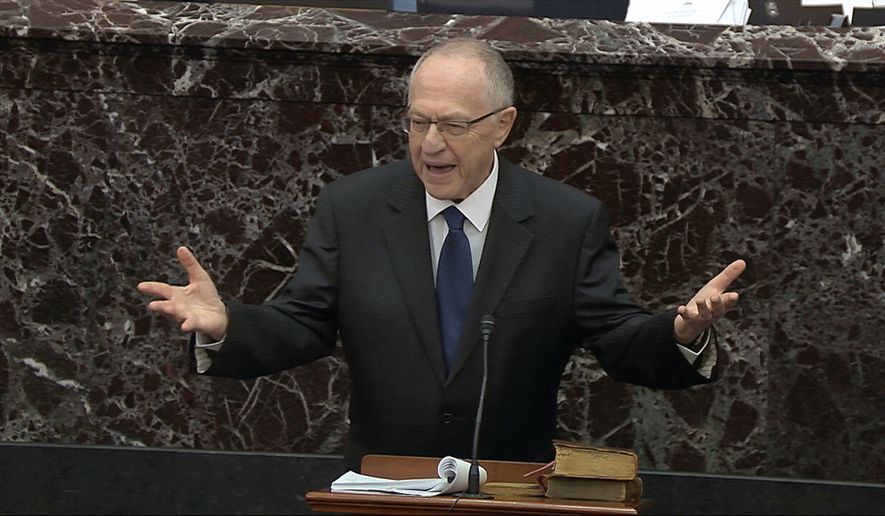
Defense

Your honor:

Your honor, listen:

He didn't do it.

Image result for dershowitz

He didn't do it so much, that we shouldn't talk to anybody who was around him at the time

And also: so what if he did it?

He can do it if he wants to, he can do whatever he wants, if you keep talking about him we'll go after you for doing it, that thing you say he did, which he didn't, but which is perfectly OK for him to do.

It's so hateful to say he did the thing he didn't do AT ALL, that thing which sworn witnesses said he did do, that thing which anybody can see he did in that truncated transcript he released, that thing which we've seen him literally do on television several times, how dare you persecute him for that thing he didn't do that you've seen him do WHICH IS FINE FOR HIM TO DO.

It's so fine to do it, so perfectly justified, so absolutely OK, that we should absolutely not hear from anybody with firsthand accounts of him doing the perfectly OK thing WHICH HE DIDN'T DO but always remember that he CAN do it and it would be GREAT if he DID do but he DIDN'T and how dare you.

Oh sure. Maybe you think he did do it and has done it a lot and is still doing it and last month we all agreed it would be really very bad if he was doing it but that was before we found out that he did do it (which he DID NOT) and now we say it's fine that he did it (he DIDN'T) but the important thing is, did you know SOMEBODY ELSE DID SOMETHING ELSE so i think you see, your honor it really makes you think


He's really innocent because even if he did it (he DID NOT) he didn't know it was illegal (which it ISN'T) and we know he's innocent of the thing he absolutely can do and everybody knows it, that's why it's SO important that we don't ever look at any of the facts or testimony pointing to it, which nobody brought up in the House because he blocked it all, WHICH WAS HIS RIGHT TO DO.

In summary, he didn't do it, but he could have if he thought he should, and anything he thinks he should do he can do, and how dare you say he did it, he was only stopping somebody else from doing that something, which was a terrible thing for them to do and also it would be perfectly fine if he had done it, that terrible thing he was trying to prevent and which he DID do AND did NOT DO. NO FURTHER WITNESSES your honor also NO PREVIOUS WITNESSES your honor Also: if any of you bastards in the jury vote against my client he's going to cut your head off and put it on a stick. The defense rests.

Also, your honor. If I may:

My client did NOT just claim he’d cut off your head and put it on a stick how DARE you suggest it how DARE you. But listen: he will. He will. And it would be fine if he did. It's his right to do that if he thinks it's alright. But nobody said he would. But listen to me carefully: he WILL. Defense rests some more.

God bless America, or whatever.


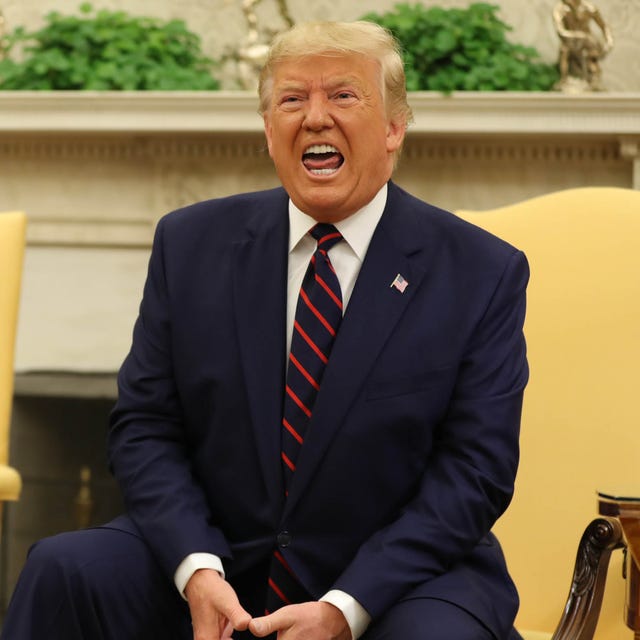
Related image