Saturday, September 16, 2017

Bubbles 9 - The Lowest Rung

Previous | Next


Doing so will offend those of us who have different priorities.

Good.

* * *

Wait, the Hypothetical Interlocutor asks, it’s good to offend?

Wait, isn’t it bad to be offensive?

Wait, aren’t you ‘justice’ folks supposed to be tolerant?

Wait hold on a second, you talk all about how bad it is to put people into two buckets, and here you are talking about the ‘good’ Justice people and the ‘evil’ Order people, well haven’t you been putting people into two buckets???

Wow, Hypothetical Interlocutor sure is asking a lot of questions right when I want them asked. Thanks, Hypothetical Interlocutor! So glad you showed up!

(Seriously, if you're writing a blog, hire a a good H.I. They really help out.)

Let’s consider tolerance and offensiveness.


Offensive
People who prioritize justice over order frequently talk to people who prioritize order over justice about tolerance; they frequently speak about how a lack of tolerance can be offensive.

Which is true.

From that one might get the idea that the whole point is not being offensive. Or that tolerance is the same thing as inoffensiveness.

This misses the point. Inoffensiveness is not the point. The point is justice. Our frame is justice.

Offensive
We must focus, not on inoffensiveness, but on establishing a system that consistently recognizes the basic inherent human dignity of all people without exception, and, therefore, prioritizes the full inclusion within public life for all people, and fulfillment of basic human need for all people, as non-negotiable moral imperatives.

Because, remember, we all belong to each other. And life is not something you have to earn.

That’s tolerance. It’s the base line.

Tolerance is the lowest rung on justice’s ladder.

Tolerance is the medicine suggested for those people you can’t stand, so as to continue, through your distaste, to pursue justice for them.

We tolerate the KKK.

Offensive
By this we mean we do not lock them up simply because we despise their grotesque bigotry. We do not disinherit them of their universal birthright—which is a claim to justice—simply because we find them distasteful. If they get cancer, we think they should be treated without having to worry about cost. If they struggle to make ends meet, we think they should have a roof over their heads, enough food in their belly, clean water to drink. We think they should not have to worry about how they will live once their bodies become too old to earn money through work. If their evil beliefs lead them to harm others, we believe their physical safety should be a chief priority in their apprehension, their trial should be fair, and their sentence carried out without violence or cruelty or exploitation. We think their children should be well-educated and, if they come to school hungry, they should be given food to eat, without having to earn it, simply because they are hungry.

That’s tolerance.

Tolerance is what happens when we insist there is only one bucket. Those who prefer justice go in that bucket, along with those who prefer order. And even those who prefer injustice. Tolerance says all humans deserve a justice grounded in unconditional love.

Offensive
Tolerance is being willing to allow space for people to exist, even though we despise them. It’s the very basic acknowledgement that other people, in fact, exist.

If I feel as if I’m being asked to be tolerant too much, I might want to think about that.

Suppose I am resentful, because I am constantly being urged toward tolerance for an ever-increasing number of groups of people. Rather than complaining about political correctness, it might be wise to reflect on what that might say about me, that I despise so many people, who must therefore be tolerated, and that I chafe so frequently against this, the most basic of justice’s requests.

It’s a pretty good hint that I’m an intolerant person if neutral reminders that other people exist strike me as aggressions requiring retaliation. If the existence of an all-female Ghostbusters movie is an affront, or a black Human Torch sends me into paroxysms of being Mad On The Internet. If a store greeter’s simple ‘happy holidays’ is an attack on Christmas, a salvo in a larger war. If hearing a foreign language in the grocery store strips me of my very country. If a gay marriage somehow threatens my straight one. If someone living outside of the doctrines of my religious practice is an attack on my religious practice.
Offensive
If a turban on an airplane makes me call the stewardess over. If pushing '1' for English is an unsustainable chore. If the mere suggestion that the football team’s mascot shouldn’t be a racial slur is the hill I wish to die on. If it’s an imposition to have to remember what words people want used to refer to them (quite literally being forced to remember somebody's name). If, upon being informed the phrases I use to talk about a group of people strikes those people as hurtful, I somehow believe that being given this information is not an opportunity to avoid rudeness, but an attack upon me. If I hear somebody tell their story of lived oppression and my first instinct is to tell them I disbelieve them, because I have never such an experience. If I think of the phrase 'social justice warrior' as an insult.

Tolerance is such a short curb, and so many, unwilling to lift their foot an inch, will loudly complain when they trip over it and fall, will present their skinned knee as evidence of a system arrayed against them.

Offensive
And then there is this:

Tolerance is something meant for unjust humans. Tolerance is no virtue when applied to unjust ideas.

Tolerance doesn’t mean I have earned the right to a public debate. It just means if I engage in one, the government cannot prosecute me.

Tolerance doesn’t mean I have the right to speak hatred at universities. It only means that should a university exercise bad taste and poor judgment, I might be invited to do so, and neither they nor I can or should ever be arrested or prosecuted by the government as a result.

Tolerance doesn’t save me a seat on a talk show couch.

Tolerance doesn’t mean my ideas won’t be met with protest and boycott.

Tolerance doesn’t mean my employer can’t fire me for saying something hateful or evil, nor does tolerance spare me from other ill consequence of harmful actions or beliefs.

Offensive
What I are after when I expect these things is not tolerance, it is consideration, acceptance or celebration.

However, if I am a person working to preserve and increase an order based on injustice, I can’t have consideration, acceptance and celebration; not from those who prioritize justice, anyway. I will have tolerance from them. It’s not much, but it’s significantly more than I afford others.

A lot of us who don’t want to treat fellow humans with even the thin gruel of tolerance get mixed up on this point when we want our noxious ideas to be tolerated. “So much for the tolerant left,” we sneer, having just expressed some opinion harmful to human dignity, having been met with opposition, or perhaps even called some nasty name as a result.

It can be very offensive to be called a nasty name, I know. So, in the interests of tolerance and justice, to any reading this who have been called nasty names simply because of deeply held beliefs that other people should lose access to equal treatment under the law, or access to essential human need, let me say this:


Tough titty, assholes.


See? Now, that's offense.

Offense is a bit different than intolerance. Offense is thick on the ground; everyone can get a handful. Offense is what happens when one person refuses to accept the values of another as true or valid.

Offensive
But our frame is not inoffensiveness; our frame is justice. And offensiveness is not injustice—because what if somebody’s most deeply held values are provable untrue, and indecently unjust? It isn’t hard to imagine such a proposition, in a society captured by a spirit that craves genocide and slavery.

Intolerance of people is both offensive and unjust.

Intolerance of values is offensive to those who hold the un-tolerated values, but whether or not that offensiveness is a product of injustice depends on what those values are.

The difference matters a lot. We have the right to not be treated unjustly. We do not have the right to not be offended, particularly if we ourselves resent being asked to acknowledge that other people exist. We don’t have the right to have our beliefs accepted by those framed upon justice, if what we believe is unacceptable to justice.

Offensive
Nor, it must be said, do those who prefer justice have the right to not be offended. Offense is a given. Those who prefer justice will offend those who prefer an unjust order. Those who prefer to maintain an unjust order will offend people with a preference for justice.

This is why I strongly suggest that, if what you want is justice, it is best to stop talking about offensiveness. To tell somebody they have been offensive is to assume they actually care about the dignity of other people enough to change their actions. It’s probably not appropriate to do so with those who have already proved this assumption incorrect at every opportunity. Turning a conversation to offensiveness with such people allows them to reframe the argument toward something you both do, which is to cause offense.

Make the conversation about justice. Leave offense out of it—and get ready to cause serious offense. Remember: There has never been a hero of justice, revered by history, that did not in their time cause great offense.

Offensive
When one is opposing injustice, the offense of unjust people is inevitable. Offense should be expected. Offense should almost be desired.

Desired? Wait. Surely I don’t mean that. Desiring offensiveness?

Isn’t it better to be polite than impolite, civil rather than uncivil?

In many cases, yes.

Offensive
Politeness isn’t bad. Politeness is good. Comity is good. Civility is good. It’s just they aren’t the most important thing—justice is. When elevated to a status more important than justice, they, like any other good thing improperly promoted, become corrupted and toxic.

Choosing politeness is often a luxury the powerful afford themselves. When I have total control over a situation, politeness is easy. It can be my way of signaling moral authority, even as I profit off of grotesque abuse. More than that—when I am an abusive person, civility is often the way I make my abuse polite. It’s how I bring order to injustice.

(We already know this, by the way. Think of the stories we tell ourselves. Our most chilling villains are frequently urbane, cultured, and polite. It’s an indicator of how chillingly powerful they are, how dangerous it is that they should be able to become likeable.)

Offensive
And, the powerful will frequently demand civility of the powerless as prerequisite to any consideration of their demands. They will use civility and impropriety as useful tools, to distract against the complaints brought on by their abuse, to reframe the debate as one of comity rather than one of justice, to ideologically separate those privileged enough to still be able to select civility away from those who struggle under a clear and present abuse and do not possess the luxury of that choice.

An excellent indication that you are successfully changing the frame to justice is this: People will start wanting to talk about politeness, who were strangely never worried about it before. The tone you’re using in the conversation will suddenly become the most important thing, much more important than the actual topic of conversation. Civility will suddenly begin to matter among those who in the recent past made successful use of shocking incivility.

Offensive
Always remember our frame. We are framed on justice.  Intolerance of injustice is deeply offensive to unjust people. Intolerance of injustice is also absolutely necessary, if what one seeks is justice.

So, if you can be polite, be polite—by all means, be polite. Politeness opens the door to the possibility of persuasion, civility ingratiates in ways that might change a mind.

But never forget that politeness and civility are choices that can be made from a position of power, and can therefore be used as a weapon of the powerful against those without. If you are able to choose civility when you are opposing injustice and abuse, I certainly recommend that you do so. But do not dare scold someone else for their incivility, as a way of closing them from their demands for justice. Do not dare pretend to make yourself the hero of their story, when they are of necessity being many times braver than you just by existing in an environment that is hostile to them.

Some will still think I’m saying civility is bad. I am not. Civility is good.

But our fight is one of priority between competing good things. And civility is not more important than justice.

In a just society, civility would obviously be preferable to incivility. In fact, civility would be a natural result of a society based on justice. It would not need to be called for; it would simply be.

But impoliteness is not injustice. And justice will offend the unjust. Justice, it must be said, is, frequently necessarily impolite in an unjust society. Civility is good, but justice is key. When in conflict with an unjust order, justice demands not civility first, but opposition.

Be polite if you can, certainly. Politeness can keep a door open, can extend an invitation into a space where persuasion might happen.

But impoliteness might pop a bubble, where politeness might not.


* * *

In one other key way, offensiveness is not injustice.

One cannot be unjust without the power to do so. One can think unjust thoughts, but without the power to enact them, injustice will not be the result.

The offense caused by the actions of the powerful is oppression.

The offense caused by the protests of the powerless is opposition.

The best way to tell the difference is to ask yourself, if these people succeed, or if they fail, what will be the result?

When oppression succeeds, an oppressed people loses their right to exist on their own terms. When it fails, those people secure that right, while an oppressive people merely lose their ability to force others to exist on their own oppressive terms.

Both opposition and oppression are offensive, but the difference matters, a lot, when the frame is justice.

When we unjust people find ourselves offended by demands of justice, we aren’t being oppressed, which suggests that some basic human right is being taken from us. Rather, we are being opposed. And of course we don’t like it. Nobody likes being opposed. It can be taken for oppression, this opposition, even if the opposing party still has far less power than the opposed.

Suppose I’ve spent years as the only voice allowed to speak, when suddenly everyone else is allowed to speak. I will feel the diminishment of my power, and may cry out at the seeming injustice, even if I do still hold the only microphone.

Suppose I’ve never before faced criticism for my decisions, because all who might criticize feared the consequence of doing so, but that fear is slowly lifted. If I am then criticized, I will feel the diminishment of my power, and may mistake this criticism as oppression, even though I still hold the most authority.

Perhaps, if I'm an abusive person, what I want is not merely all the authority and all the consideration and all the power. Perhaps I even want to capture for myself the one thing that those I abuse have, which I do not, which is the moral clarity that comes from opposing injustice. One mark I leave behind when I am an abusive person is that I, bereft of true heroism, not oppressed but seeking to oppress, awkwardly cloak myself in borrowed signs of heroism, imagery stolen directly from the struggle against oppression of those I intend to oppress.

Look, it's the Ruby Bridges of powerful people who want to cut back on civil rights in schools
Look, it's one of the many Rosa Parkses of
people-who-want-to-decide-who-sits-where-on-various-metaphorical-busses

Every villain in every story ever told thought they were getting a raw deal when they faced opposition. But that doesn’t make the happy ending any less happy when they were defeated.

Happy, because there was injustice in the world. People without power were being treated by people with power as if they weren’t even people. And then something happened to chance that power dynamic, and afterward more people had more room to live and be and exist than they did before.

There’s always somebody at the end of that story that lost the power they were abusing. Someone is always rightfully diminished. And everybody listening to the story is very glad.

Injustice rises to power. Injustice abuses and oppresses. Injustice meets resistance. Injustice is defeated. It’s a good story. We tell it again and again.

In our stories, the fall of an abuser is a component of every happy ending.

But then again … another component of our happy endings is the restoration of the status quo. Of order. What to do, then, when the status quo is itself abusive?

It’s time for us to consider the marketplace of ideas. It’s time to consider ‘both sides.’


FRAME
0. ART
1. SISTER
2. THE GREAT DIVIDE
3. SPIRIT
4. BELONG
5. BUCKETS
6. THE KNIFE AND THE TRAIN
7. OUR FAVORITE FLAVOR

STORY
8. CHANGE THE LOCKS
9. THE LOWEST RUNG
10. BOTH SIDES
11. I’M TRYING, RINGO
12. EVERYTHING IS PERMITTED

Thursday, September 14, 2017

Bubbles 8 - Change the Locks

Previous | Next
The Kingdom of the United States is like a brother and sister named Thomas and Mary, who moved next door to one another with their spouses….

* * *

Remember the story of the two couples?


Let me ask you: who, after listening to that story, wants Sally to go back to Thomas?

Well, Thomas does, for a start. Thomas is an abusive person. What Thomas wants is what abusive people want: Reconciliation without reparation. He wants continuation of the power that allowed the abuse, and the permission to continue that abuse without consequence. An abusive person wants your complicity.


And if he can’t have that, then he wants everybody to pretend. He’ll deflect. He’ll call attention to all the things he does that aren’t his abuse, and wonder why you won’t focus on those. He’ll insinuate that the existence of good deeds and good qualities make the bad qualities impossible. Evil people beat their wives. I have done these good things. Therefore I am not evil. Therefore I do not beat my wife.


And if everybody won’t pretend, he’ll want everyone confused. He’ll lie. He’ll tell you that what you both know happened didn’t happen. He’ll tell you that he didn’t say what you know he said. He’ll tell you you did say what you know you didn’t say. He’ll insist. He’ll make you start to wonder if you’re crazy. Convincing you the lies are not the point. Making you wonder if you’re crazy is the point. Because if you’re confused about one thing, then you’re probably also confused about him.


And if you won’t get confused, he’ll want you to ignore. He’ll promote a theory that he’s no worse than his victim. He’ll point out all the ways his victim is at fault. He’ll make the case that any bad thing is equally as bad as any other. Because if his victim is as bad as he is, then he and his victim deserve each other—and what business is it of anybody’s anyway? The abuser wants your adoration, but he’ll accept your apathy.

And if you won’t ignore, than he’ll rage at how unfairly he’s being treated. He’ll insist he is a misunderstood victim in a situation that has sprung up all by itself. He’ll lash out. He’ll make it uncomfortable. The removal of the discomfort will be the incentive to comply. And if you comply, he’ll flatter you as a reward—until next time.


Most of all, an abusive person wants to be the priority. To the great philosophical question “what is the most important thing?” the abusive person answers: “I am the only thing.”


The one thing an abuser cannot abide is something that interferes with his ongoing favorable self-regard.

An abuser can never do wrong. He can only be wronged.

An abuser always has to be both the hero and the victim of his own story.

And, an abuser will always try to impose his reality upon reality.

It won’t be effective to debate an abuser. An abuser has to be opposed, and then defeated.

But how? With more abuse?


* * *


Who wants Abe to side with Thomas? Who wants Mary to open the door for him? Who wants Sally to return to him?

Nobody, I hope. But I know better.

Nor do I harbor any illusions that there are people who want Mary to open the door for her husband. I hear the arguments. What did he do, anyway? He’s just trying to give everybody a fair hearing. He wants to hear both sides. It takes two to tango.

But here’s Sally. Her face a bruise. She’s come to you for help. She’s undeniably abused.

And here’s Abe, whose first instinct is to … try to get things back to normal.


I can sympathize with Abe. I tend toward en-Abe-lement, myself. Who doesn’t want to see things go back to comfort and ease? Who doesn’t want everybody to get along? Who doesn’t want to restore right relations, to forgive and forget? Isn’t forgiving good? Why are you against forgiveness, anyway? And isn’t reconciliation a good thing? Restoration of right relationship? Why would you be so divisive?

I hope we all see the problem.

The problem is that the divide is real, and it is caused by abuse. Only the abuser can reconcile that divide. And there’s only one path for the abuser to do so: He must recognize his abuse for what it is. He must admit it. He must apologize—to the victim, not to someone else. And he must accept the consequence of what he has done.

Only then is it appropriate for his victim or others to consider reconciliation. Before that happens, there is no true reconciliation, only the false reconciliation of enablement, which makes future abuse not only likely, but also inevitable.

It isn’t anybody else’s place to speed the process. Cajoling a victim under threat of abuse to reconcile with their abuser, while still under threat of further abuse, is itself abuse.

Reconciliation without reparation is the abuser’s desired end.

What the abuser needs is for the victim to apologize to him for the abuse she’s endured at his hand, so he can go on being the hero and the victim of his own story. What Thomas is offering Abe and Mary is the opportunity to apologize for Sally by proxy, to forgive him for crimes he committed against somebody else, not because they are the ones made vulnerable by his abuse, but because their relative safety gives them the power, the ability, the leverage, to smooth it all over. Abe accepts the offer. Mary changes the locks.

The difference matters, a lot, when your frame is justice.

For an interested third party to reconcile with an abuser while his victim still lives under threat of abuse betrays the victim, leaves her stranded, friendless, vulnerable. It’s inappropriate. It’s complicity. And it is very, very, very tempting.

Tempting, because the abuser has power—that is why he can abuse in the first place—and no compunctions about turning some of that abuse back on those who challenge him. And, when justice and order come into conflict, human beings tend to prefer order.

It’s worth reiterating that order isn’t a bad thing, taken by itself. But order, like so many other good things, becomes corrupt when it is elevated inappropriately above its station.

Sometimes, restoring order is inappropriate.

Sometimes, maintaining order is abusive.

Sometimes, your sister is bleeding and frightened for her life.

Sometimes, the only appropriate thing is to change the locks—whatever that might look like.

Maybe changing the locks looks like this: Refusing complicity. Not letting people infer through your silence that you think their beliefs are good and just and true, rather than unjust and harmful.

Maybe changing the locks looks like this: Refusing distraction. Not allowing the existence of a person’s good qualities to distract from the fact that a person’s beliefs are unjust and will make abuse not only likely, but also inevitable.

Maybe it looks like this: Refusing to be confused. Insisting on the truth. Not accepting a deflecting flurry of lies. Not accepting a false reality.

Maybe it looks like this: Refusing to ignore. Not giving in to the temptation of comfortable apathy.

Maybe it looks like this: Refusing debate with someone whose methods and purposes are abusive, simply on the grounds that they are being abusive and you refuse to be abused.

Maybe it looks like this: Reporting a crime being committed by a powerful person against a powerless person.

Maybe it looks like this: Putting your body between somebody who might be harmed and the person who intends to harm them—without violence, if possible, and if you possess sufficient physical bravery.

Maybe it looks like this: Listening to somebody talk about their lived experience of oppression without deciding the conversation needs your perspective. Understanding that some conversations only need your ears, not your voice.

Maybe it looks like this: Listening to somebody explain the lies they’ve believed without knowing they are lies, allowing them to present you in great detail the exact contours of their chosen bubble, and then asking them: “But aren’t you aware that every human being is a unique and irreplaceable work of art carrying unsurpassable worth?”

Maybe it looks like this: refusing to scold a person who happens to live under daily persistent threat from powerful people for the tone or methods they use to cope and survive. Maybe it’s supporting people whose family faces separation, whose marriage faces nullification, whose child faces bigotry and hatred, who represents a presumed danger to armed authorities oriented upon violence—and supporting them even if their responses to these outrages and threats are not as polite as you might prefer.

Maybe it looks like this: allowing yourself to absorb some of the criticism, and even some of the daily persistent threat, and maybe even some of the abuse, by associating with people who have been made vulnerable by an unjust society, and who therefore are mistrusted and feared by that society.

Maybe it's recognizing the places where you are society's accepted and preferred default, and the ways that other people are not.

Maybe it looks like a sincere apology to somebody you hadn't realized you'd wronged.

Maybe it's realizing that in any story, the person who persists and overcomes injustice is the hero, and that means that the real hero of our country's story is somebody other than yourself.


Maybe it looks like not being able to be around somebody for a while, not because you no longer love them, but because things are not the same, now that you know what they are willing to accept.

Maybe it looks like taking to the streets in protest. Maybe it looks like calling your representative every day. Maybe it looks like a sign in your yard. Maybe it looks like a post on your Facebook page. Maybe it looks like writing a massive series of blog posts.

Maybe it means letting things get uncomfortable and stay that way.

Here’s what it always, always, always looks like: Insisting on keeping the frame of the discussion at all times on the issue of justice.

Insisting that we all belong to each other.

Insisting that life is not earned.

Insisting that violence does not redeem.

Insisting that human value is not determined by human profitability.

Insisting that all people—all people—are unique and irreplaceable works of art carrying unsurpassable worth, who possess inherent dignity, and who deserve equal consideration under the law and access to basic human need, simply because they exist.

Insisting that all other good things are only good insofar as they are not elevated above this essential truth.

Insisting that any good thing that is elevated above this essential truth ceases to become good, is perverted into an injustice.

Insisting that any order that would preserve injustice must be dismantled and rebuilt.

We are now reframed upon justice. It is a justice based on love. It recognizes all mediums of human art. Insist upon this new frame. Reject all others.

Doing so will offend those of us who have different priorities.

Good.


Tuesday, September 12, 2017

Bubbles 7 - Our Favorite Flavor

Previous | Next

What the malignant spirit that has captured us wants, by the way, is this: genocide and slavery. Literally.

* * *

Congratulations! You’ve made genocide inevitable. Now, for slavery.

For slavery you take genocide, and make it profitable. As we are nothing if not a hyper-capitalist society, slavery has always been our favorite flavor of genocide. Wealthy men, addicted to the high of free labor and all the attendant benefits, founded our nation. Not fans of taxes, those guys. Also not a huge fan of paying for labor—so they baked slavery right into our national cookies.

Some of them had reservations about slavery.

They got over it.

And we eventually fought a war to end slavery. That’s the story—and it’s a true story, to an extent.

But there’s another story that also has to be true for that statement to be true. We also fought a war to preserve slavery. If you doubt me, just look to our statues. Those who preferred the order of slavery more than they preferred the order of a unified country lost their war to preserve that evil institution. Meanwhile we are all inheritors of the victor’s preference, which for many was not the abolition of slavery, but merely a restoration of unified order. This victor's preference happened to bring about the great justice of emancipation, but this result sprang as much (or more) from pragmatism as from a preference for justice. And many of us still living today think the lost cause of the vanquished should not have been lost, and long to restore that order, to let rise again to greatness that which has been laid low.

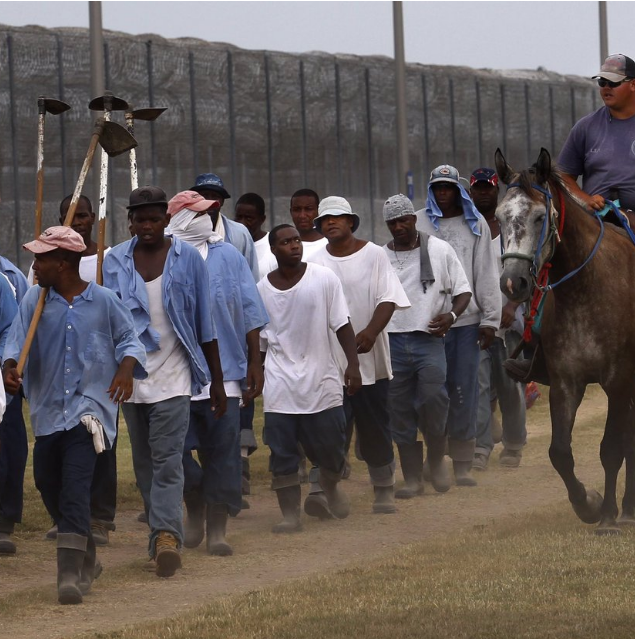
Please read Samuel Sinyangwe's story on incarceration in Louisiana.
There are still those of us who fly the flag of that cause, and erect statues to it. Any suggestion that this practice be discontinued for the sake of descendants of those who suffered slavery is met with hostility, framed as a moral outrage, an intolerant attack upon 'our' heritage. That’s not what that flag means to us, we proclaim, as if only we get to choose the meaning of symbols once put to violent uses against others, as if we can divorce that meaning from history, any more than Germans could fly the swastika and proclaim that it has nothing to do with Nazis, without also admitting that the perspective of Jews still means nothing to them.

You can find in this country reenactments of plantations, dedicated to the idea that slaves were well-treated, almost family members. You can find history books that say the same. You can find school boards who insist that these book be used in schools to the exclusion of others.

You can find it embedded, completely unexamined by producers, into the backgrounds of our game shows.

You can find people who will tell you black people had it better when they were bought and sold and owned and used like livestock. If you want to meet any of them, I would direct you to right-wing cable news, or to your nearest social media outlet, where souls feel free, under hoods of anonymity, to unburden themselves of their horrid thoughts.

And, these days, sometimes they don’t even bother with the hoods.


Often your first thought is your best thought, Tucker.
The North won the war, it’s true. But, since they seem to have ceded to the South the victor's perquisite to write the history books, we might conclude it is because the North, even in victory, still preferred order to justice. We might wonder, if we happen to prefer justice to order—did the North fight to end slavery? Or did they simply consider the order of the Union more important—maybe only slightly more so—than the order of slavery? Did the North, having secured the order of the Union, comfortable with their own flavor of injustice, feel little need to quibble about the morality of the South's preferred flavor?

Or, perhaps, we don’t wonder.

The desire for slavery is never far from us; you’d need to be in a bubble to miss it. It is not buried in the past; it is near, near, near, now, now, now. The order of slavery, disrupted not so very long ago, longs to be restored. It’s the not-so-secret wish lurking in the hearts of thousands and millions of us. Not overtly, of course, and not for ourselves, of course—but it as the natural destination of the lies we've believed, the true North of our moral compasses.

Slavery is what happens—it’s the natural end point—when the buckets you use to divide the people who have earned life from the people who haven’t are labeled PROFITABLE and NOT PROFITABLE.

Once wealth becomes self-evidently fungible with moral justice, anything that creates a greater profit will eventually be taken to be moral and just.

And cheap labor creates profit. But free labor creates even more profit.

And so free labor is very, very good.

Or, let’s think about corporations.

A corporation is an entity that ensures profits for a small group of stakeholders by providing value to those with the wealth to afford such value, and by paying others only as long as they demonstrate skill enough to assist the continual strategic growth of that profitability.

A corporation is an excellent tool for accomplishing these good things, and toward those goals it can effectively provide significant value to a society in ways that few other entities can.

For what they are designed to do, corporations are very good. They have done good. They have improved the human experience and condition—within that specific context.

However, corporations are a terrifyingly poor tool for pondering the essential dignity and human need of those lacking either the wealth to afford the benefits the corporation provides, or the skill to assist the corporation’s growth.

Corporations view the people that labor for them as assets, as resources, and routinely evaluate those resources to make sure they remain strategically relevant and valuable toward the execution of their mission, which is the continual growth of profit. If it is determined that these resources are no longer strategically relevant and valuable toward their mission, they are jettisoned. Since the mission of corporations is to create profit for their owners, this is a very appropriate thing for corporations to do.

I’ll say this again, so it’s not missed: Within the specific context of what corporations are designed to do, this is an entirely appropriate orientation toward people. When placed within the correct context, this orientation creates opportunity and value for both people and corporations.

But, because the mission of a just society is not to create profit for a small group of owners, it is an extremely inappropriate and harmful orientation for a society to have toward people. And it is extremely corrosive to organize society so that corporations, more and more, are the only realistically available method of sustenance and flourishing for human beings.

Nevertheless, in a society captured by the idea that profit is moral virtue, captured with the assumptions that unprofitable people have not earned life, the idea might arise that our government—which is how we organize our shared life together—might be better run as a corporation, to better enhance profitability’s moral virtue, and this idea might begin to seem very reasonable and wise and moral. In a society that has been captured by such ideas, you might find that the larger a corporation gets, and the more powerful, and the more influential, the better its size and power and influence are deemed to be. The reason is simple: A corporation is the best possible vehicle for capturing and growing profit. If profit is your greatest moral value, than a corporation becomes the most moral thing imaginable.

And, in such a society, being unprofitable becomes a kind of original sin.

Story here.
You might find that heath care is allowed to become a product in such a society. A product like health care, which is literally life where there would have been death, which is healing where there might have been suffering, which has by its very nature a market value approaching the infinite, might be allowed to reach such near-infinite valuations on an open market, so that it is effectively unpurchasable by most. This, in turn, might create a massive market for health insurance, itself barely affordable for individuals, whose acquisition can only be safely secured through a corporation, requiring individuals to sedulously maintain their profitability so as to continue, quite literally, to earn life.

You might even find that health care produces a product that brings not healing and life, but addiction and death, but that it is allowed to continue for decades, simply because it is so gloriously and morally profitable.

In such a society, you might see a bill proposed that denies health care coverage to millions, for the crime of having been sick in the past. These sick people have failed the simplest moral test: they have failed to be profitable. Any consideration for their humanity is irrelevant beside the sin of their unprofitability, because we don’t all belong to each other, and because life is something you earn, not something you’re born with. You might find hundreds of thousands of people afraid, no matter how vulnerable it makes them, to leave the job they held before they became unprofitable to the healthcare industry, knowing if they leave the protective umbrella of their corporation's outsized influence, or if their corporation decides to withdraw it from them, they are unlikely to ever again find themselves deemed worthy to affordably access life.

The idea that health care might be a right afforded to all humans by the simple fact of their humanity might begin to seem a deeply offensive idea, when a society is dedicated to profit as its primary goal.

The idea that access to clean drinking water should be a right might seem offensive, or at least impractical, precisely because its lack of market value will devalue it; an argument which presupposes that water's role as an essential necessity for human life is an insufficient enough value to be assigned worth by a society that presupposes that profitability is a higher value than that of life.

The idea that a person's ability to move from an area that threatens their life to an area of stability is a human right might begin to seem dangerous and offensive, precisely because the human inflow will be expensive and disruptive, which will cut into profit.

The idea that unprofitable humans should have easy access to the vote might begin to feel like dangerous fraud.

The idea that a labor force would organize might begin to seem deeply offensive and immoral, precisely because the human advantages to be gained would cut into the existing and outsized corporate advantage, which are driven by profit and result in profit. The idea that corporations might enact countervailing measures against organized labor on might be seen as inevitable, and those measures, however draconian, might be seen as desirable and moral. If the measures have some evil effect, the fault will never lie with the entities enacting the measure, but the laborers, whose organized demands for fair treatment mercilessly forced their employers’ hands, compelled them to take drastic action to preserve the ultimate morality of profit.

The idea that there might be restrictions upon how a corporation uses natural resources, on the grounds that those restricted uses endanger human well-being, might begin to seem fatuous, short-sighted, onerous, even offensive.

The idea that there should be restrictions placed on corporations to prevent them from using their outsized resources to influence government might seem outdated and foolish and strange.

The idea that corporations might be allowed to maximize profits by consolidating, so that industries are controlled by fewer and fewer corporations of larger and larger size, providing more and more benefit to fewer and fewer people, might start to seem wiser and wiser.

It might seem to us that the justice system should be made profitable; that our prisons systems should be run by private industry, that crime and punishment should become a growth industry, that prisoners should become product.

The idea that prisoners can be used for pennies an hour might seem very reasonable and wise and moral, and the idea that we should make human imprisonment subject to the continual strategic profit growth demanded by private industry will no longer trouble us. Even once we imprison more of our population than any other country, we will go on proclaiming ourselves The Land of the Free, without a trace of irony—because what could possibly create more freedom than maximizing profit?

It might seem that education should be made profitable.

It might seem that unemployment relief is theft. It might seem a free lunch given to a hungry child is a moral sin.

It might seem that wars should become a growth industry, maximized for profit. You might even hear this idea suggested by the brother of the Secretary of Education, who is herself working to make education profitable.

It might seem as if real and proven future threats to human life should be ignored, if the solutions to these threats might threaten present profits.

It might seem that everything should be made profitable or, if it cannot be made so, be jettisoned.

It might seem that people should be made profitable, or else jettisoned.

And then, it might begin to seem that being profitable is how you earn life.


It might seem that citizens of a country are considered at-will employees of the corporation of that country, their existence to be determined by what monetary value they are able to deliver in the coming fiscal year.

And then we might start thinking that corporations are people. And that people are not.

And we might decide to run our government—which is the way a people organize their shared life together—as if it were a business.

And then we might hire a businessman to run it.

And, if it turned out this entire premise were based upon a set of horrendous lies, you might find that the businessman we hire to this end would be the most horrendous sort of liar.


The endpoint of this business will always—necessarily—be profit. And profit will require jettisoning unprofitable people. And, since we are talking about government, which is how we organize our shared life together, then jettisoning will not mean firing the no longer profitable, but abandonment and death and enslavement. The definition of 'unprofitable' will be in some cases a matter of bad luck, in others a matter of inevitable entropy, and in many others an almost religious predestination, based upon our preexisting and long-established injustices.

The country that becomes a business can only eventually have one product, which will be murder and theft for profit.

Within this business, there will be those of us who want to kill and use others out of hatred and fear and anger, for unprofitable violations against a profitable system.

And there will be others among us who decide to kill and use out of a failed compassion, a misplaced altruism that does not extend far enough out of our own comfort to allow for modifications to an abusive and unjust system. Too unimaginative to challenge the atrociousness of our proposed foundational lies, we seek the softest atrocity within that structure.

Here is the great and final conclusion: There are people who do not matter, and it is their own fault. It is better if they die, but it is best if they can first be used.

And, if this were a deeply ironic universe, we might see a society believing all these lies as a fundamental component of their adherence to a religious tradition that worships a deity that taught his followers he would be found among the hungry, the thirsty, the prisoner, the stranger, the destitute, who taught that no man can serve two masters, and that the eye was the lamp of the body, who taught that humans were to live like the birds of the air, not chasing after tomorrow, but rather coming to eat, freely, without price.


The penalty and the danger for believing this lie is this: self-enslavement. When I live in a world where my only value is the profit I can deliver, then I’ll live my life trying to deliver it, and when I can no longer deliver it, I’ll no longer feel my own worth. I’ll become such a person that can be used by whoever will value me, and, having so devalued myself, I’ll never see the unsurpassable value of others. I’ll wear the chains. I’ll put them on myself, right after I’ve made them.

A world in which profitability is the prime measure of human moral virtue is a world in which I am no longer art, but product.


* * *

So. There are some who want genocide and slavery for their own enrichment—true believers. And then there are the rest of us, who prefer order to justice, and the true believers wield that preference of ours with precision to achieve their rough ends.

Most of us don't want slavery and genocide. We've just been convinced of a set of proposals that will make it inevitable.

We conservatives and libertarians don’t exactly want genocide and slavery, maybe. We just don’t want the hassle of the disorder it’s going to require to not have genocide and slavery. This isn’t how we think of it, because we've furnished ourselves with bubbles, surrounded ourselves with mirrors that don’t allow us to see ourselves. We have architectures of justification we’ve constructed for our support of what may seem like heartless propositions, proofs of their efficacy and hidden morality, of their status as necessary and pragmatic measures, not capitulations to evil. We can send you links. We have them at the ready.

We liberals and moderates are not so removed from this. We’re willing to go so far as to vote against genocide and slavery, but if we lose, we’re pragmatic. Time to all pull together and help the president succeed. And after all, we tell ourselves, there’s not really much difference between the parties. It’s comfortable to reconcile. It makes us feel reasonable and open-minded. And, we think, whatever the other party does, we can always say ‘I told you so.’ We can’t say we didn’t know. But we can always say we never voted for it. It’s a thin blanket, but it gives us something at which to clutch. We have architectures of justification we’ve constructed. We have mirrors that don’t allow us to see ourselves. We can send you links. We have them at the ready.

Because there are some who talk about justice and equality for all. But talk is easy; there are only a few of that number—a precious few—who truly enact it. And there are many others, who talk of law and order. And in America today, the order of genocide and slavery is the order they fight to protect.

If you don’t care for the term ‘genocide and slavery,’ try this one: Death of the unprofitable, for profit.

That’s our country right now. That's the spirit that has captured us.

That is our frame, defined.

Engaging in a debate set within this frame seems a futile occupation, for even if we 'win,' we still occupy a slightly less unjust space within an unjust frame.

The frame is the problem. We have to move it.

That’s what I dare hope thousands and millions of us realized, when our ‘liberal’ bubbles popped.

It's time to talk about Story.


FRAME
0. ART
1. SISTER
2. THE GREAT DIVIDE
3. SPIRIT
4. BELONG
5. BUCKETS
6. THE KNIFE AND THE TRAIN
7. OUR FAVORITE FLAVOR

STORY
8. CHANGE THE LOCKS
9. THE LOWEST RUNG
10. BOTH SIDES
11. I’M TRYING, RINGO
12. EVERYTHING IS PERMITTED